G.V.Lab.(Global Volunteer Laboratory)

LCA of Urban Wet-TSA DAC + Liquefied CO2/Dry Ice Production System

1. Assumptions (A realistic model tailored to the specifications of a Wet-TSA system utilizing waste heat from CO2 compression, cooling, liquefaction, and dry ice production equipment)
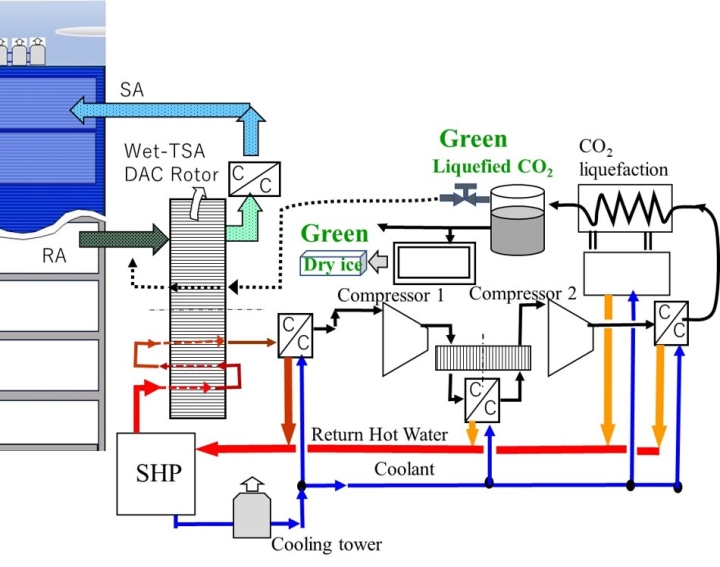
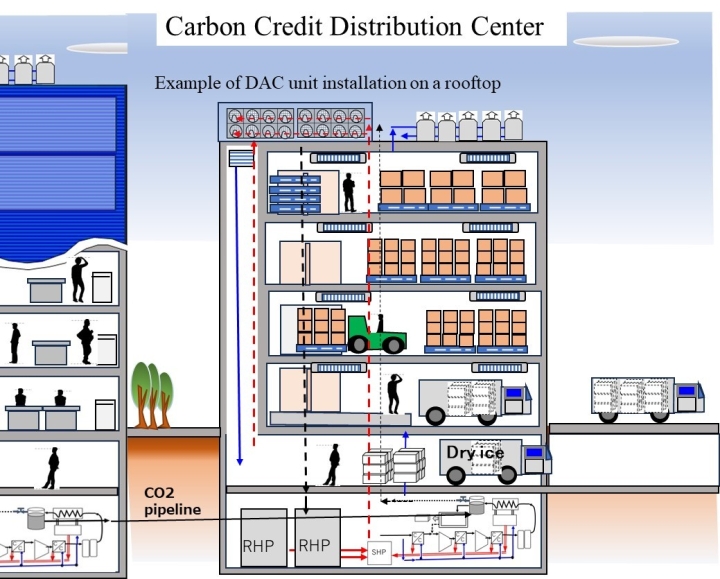
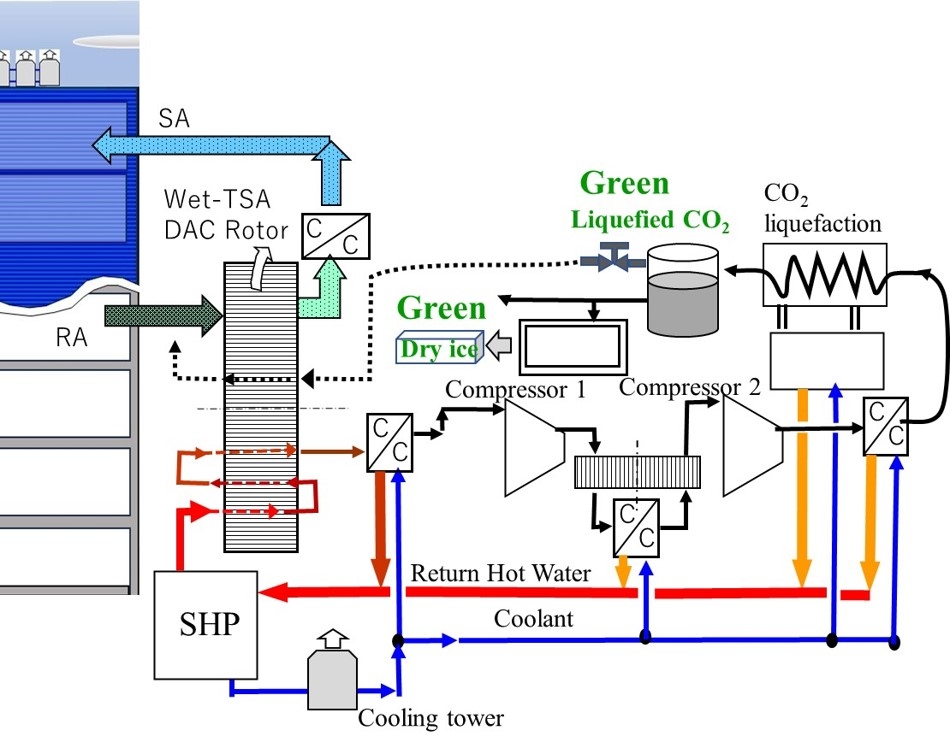
This document presents the LCA (Life Cycle Assessment) of an urban DAC (Air Conditioning Exhaust DAC + Wet TSA + Utilization of Urban Exhaust Temperature and Humidity + Waste Heat Reuse for Liquefied CO) in numerical form.


Based on the features of OKANO's two patented technologies, a realistic numerical model for an urban DAC has been constructed by combining international DAC energy intensity, measured values ​​of liquefied CO, and CO concentration data from air conditioning exhaust. (Note) Please consider the AI-calculated values ​​as reference values.


LCA of Urban DAC (Air Conditioning Exhaust DAC): Numerical Model (Latest Version)

1. Assumptions (A realistic model tailored to the specifications of a Wet-TSA system utilizing waste heat from CO2 compression, cooling, liquefaction, and dry ice production equipment)
Urban Wer-TSA DAC + CO2 Compression, Cooling, and Liquefaction System

2. LCA Calculation: When 1 ton of CO₂ is recovered and liquefied

(1) Energy Consumption

✔ Wet TSA (after waste heat reuse): 0.5-0.8 × (1-0.4) = 0.30-0.48 GJ/t-CO

✔ Compression and Liquefaction (after waste heat reuse): 0.35-0.45 × (1-0.3) = 0.25-0.32 GJ/t-CO

✔ Total: 0.55-0.80 GJ/t-CO

This is 1/10 to 1/15 of the world's DAC (6-12 GJ/t). The Wet-TSA method, combining "urban exhaust + Wet-TSA + waste heat reuse," has the potential to become one of the world's lowest energy intensity groups.


(2) CO Emissions (Electricity-derived)

When 1 GJ = 277.8 kWh, 0.55 to 0.80 GJ = 153 to 222 kWh

153 to 222 kWh × 0.45 = 69 to 100 kg-CO

✔ Emissions required to capture 1 ton: 69 to 100 kg-CO

(3) Net Reduction (Net Negative)

1000 − (69 to 100) = 900 to 931 kg-CO

 Net Reduction Rate: 90 to 93%

This is more efficient than forest absorption and represents a reduction performance level classified as DAC credits ($600 to $1,000/t).

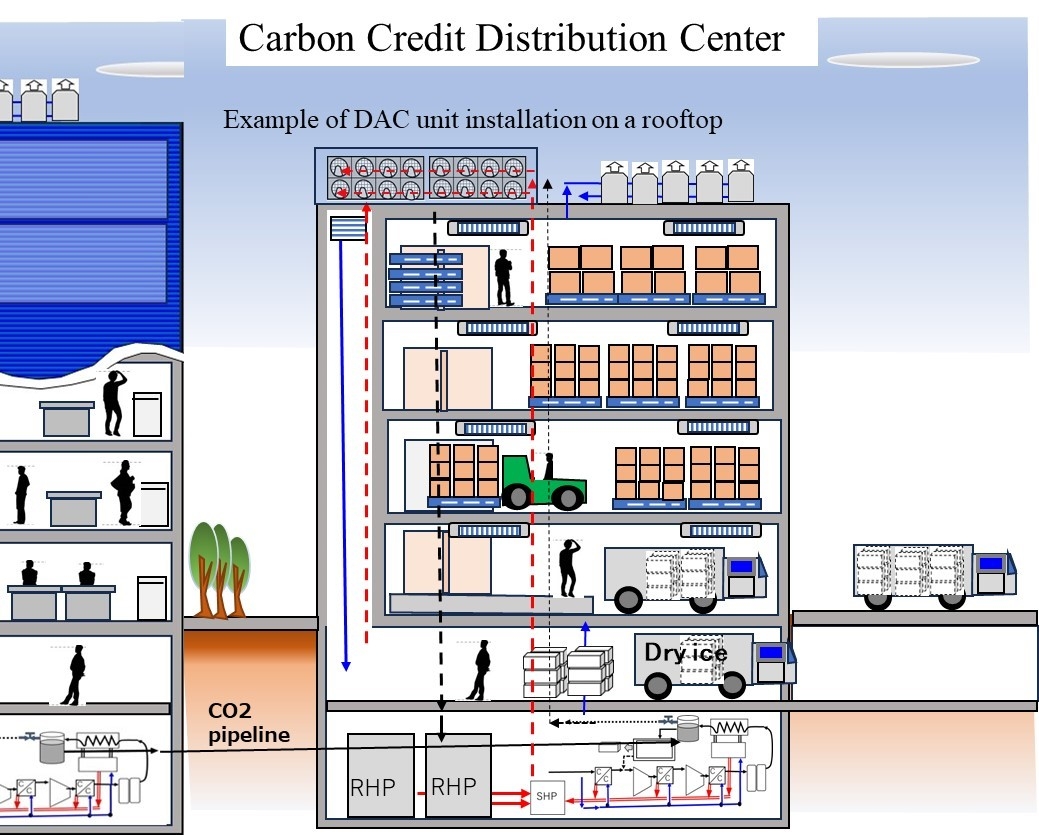
Introduction of an urban Wer-TSA DAC+CO2 compression, cooling, liquefaction, and dry ice production system into urban logistics.
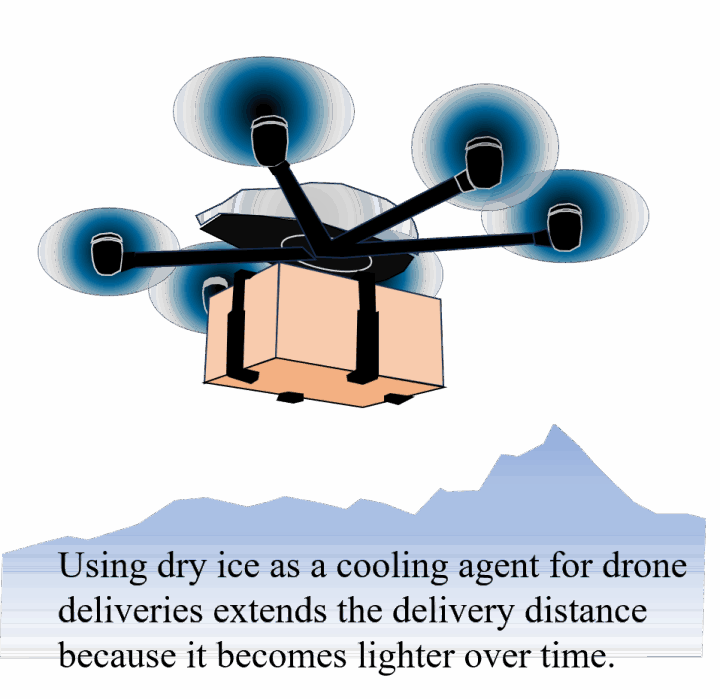
Drone delivery of pharmaceuticals and frozen foods can also be made more efficient with locally produced dry ice.
Large liquefied CO2 transport tank trucks will become unnecessary.

3. LCA (Life Cycle Assessment) of Green Liquefied CO₂ and Dry Ice

The LCA of liquefied CO is evaluated as follows:

✔ The CO in the product is "CO removed from the atmosphere" → Evidence that the product itself is a "negative emission"

✔ Short transport distance (in-city production) → Significant reduction in logistics CO

✔ Dry ice does not emit CO even when sublimated → Carbon neutral product

✔ Captures unavoidable urban emissions (from respiration) → Treated as a reduction, not an additional emission

As a result:


 The environmental value per ton of product is evaluated as "net reduction (900-931 kg-CO)".

Large dry ice transport vehicles will become unnecessary.

About

PAGE TOP