Energy conservation in CO2 capture, concentration, compression, cooling, dehumidification, and liquefaction.
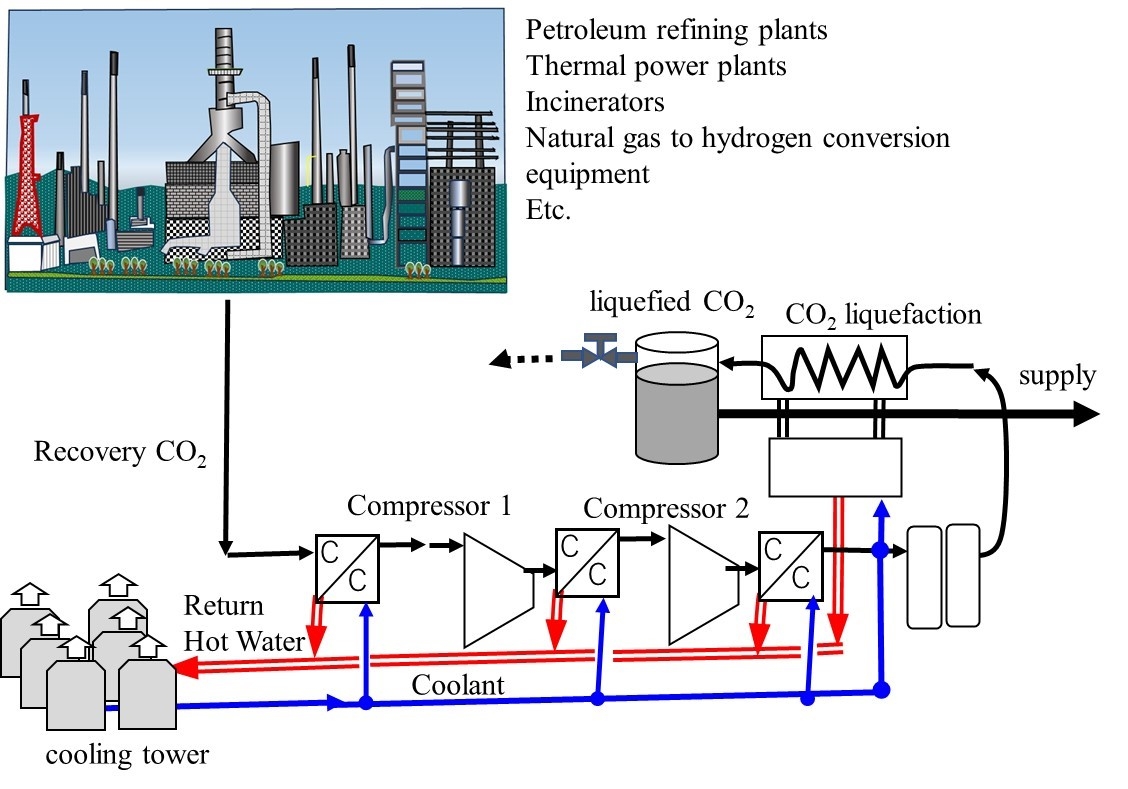
Conventional gray CO2 recovery, concentration, compression, cooling, and liquefaction systems require a large amount of energy for the CO2 recovery and concentration equipment. Furthermore, a significant amount of compression heat is generated during CO2 compression, as well as latent heat of liquefaction. This heat is removed by a chiller, and the resulting heat is released into the atmosphere via the latent heat of water evaporation in a cooling tower.
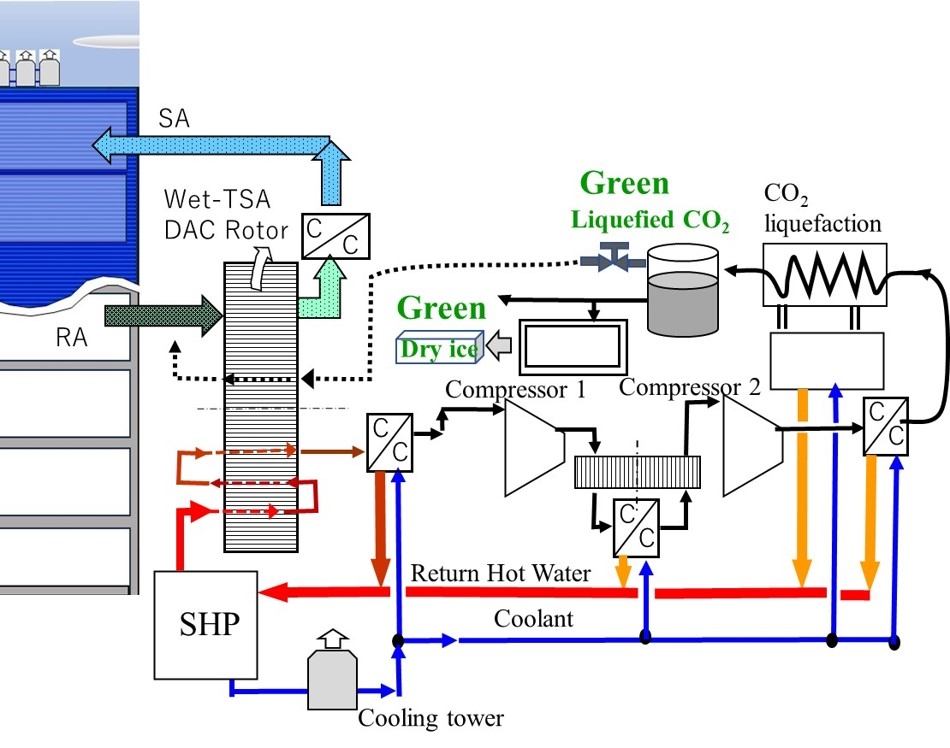
The newly developed Wet-TSA method CO2 recovery and concentration system recovers and utilizes the heat from compression, liquefaction cooling, and the waste heat from latent heat of liquefaction. Therefore, the thermal energy required for the Wet-TSA recovery and concentration system is almost entirely eliminated.
In addition, while CO2 gas containing trace amounts of non-liquefiable air components is exhausted, the Wet-TSA CO2 recovery and concentration system utilizes this gas to improve the recovery concentration, and any excess is returned to the CO2 recovery air for re-separation.
Furthermore, the Wet-TSA method is a new adsorption and concentration technology that utilizes the latent heat of condensation of saturated steam at approximately 100°C to supply heat for heating and desorption of the CO2 adsorbent. During adsorption, the condensed water rapidly cools the material, and the heat of adsorption is cooled to enhance adsorption performance. This is a reverse approach to conventional recovery and concentration methods that consider water an obstacle; instead, it utilizes steam⇔water for thermal management, resulting in high performance and a compact design.
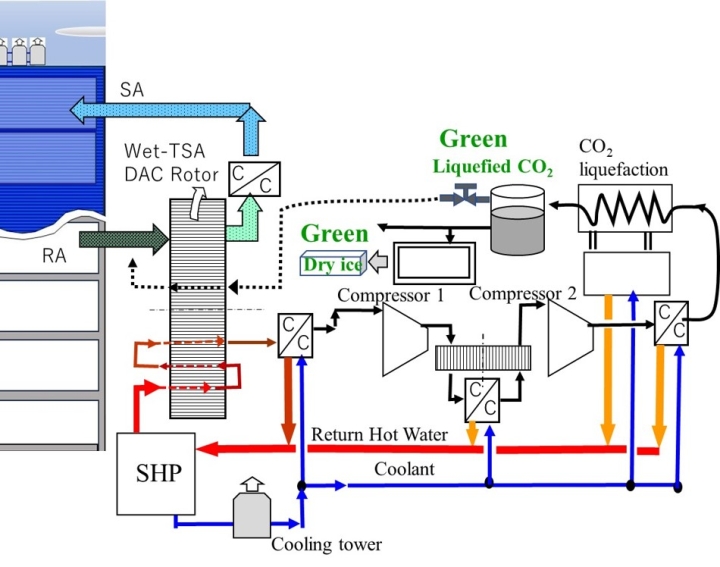
Figure 1 shows an enlarged view of a single Wet-TSA concentration unit for illustrative purposes. In reality, it consists of an assembly of small, easily replaceable units.
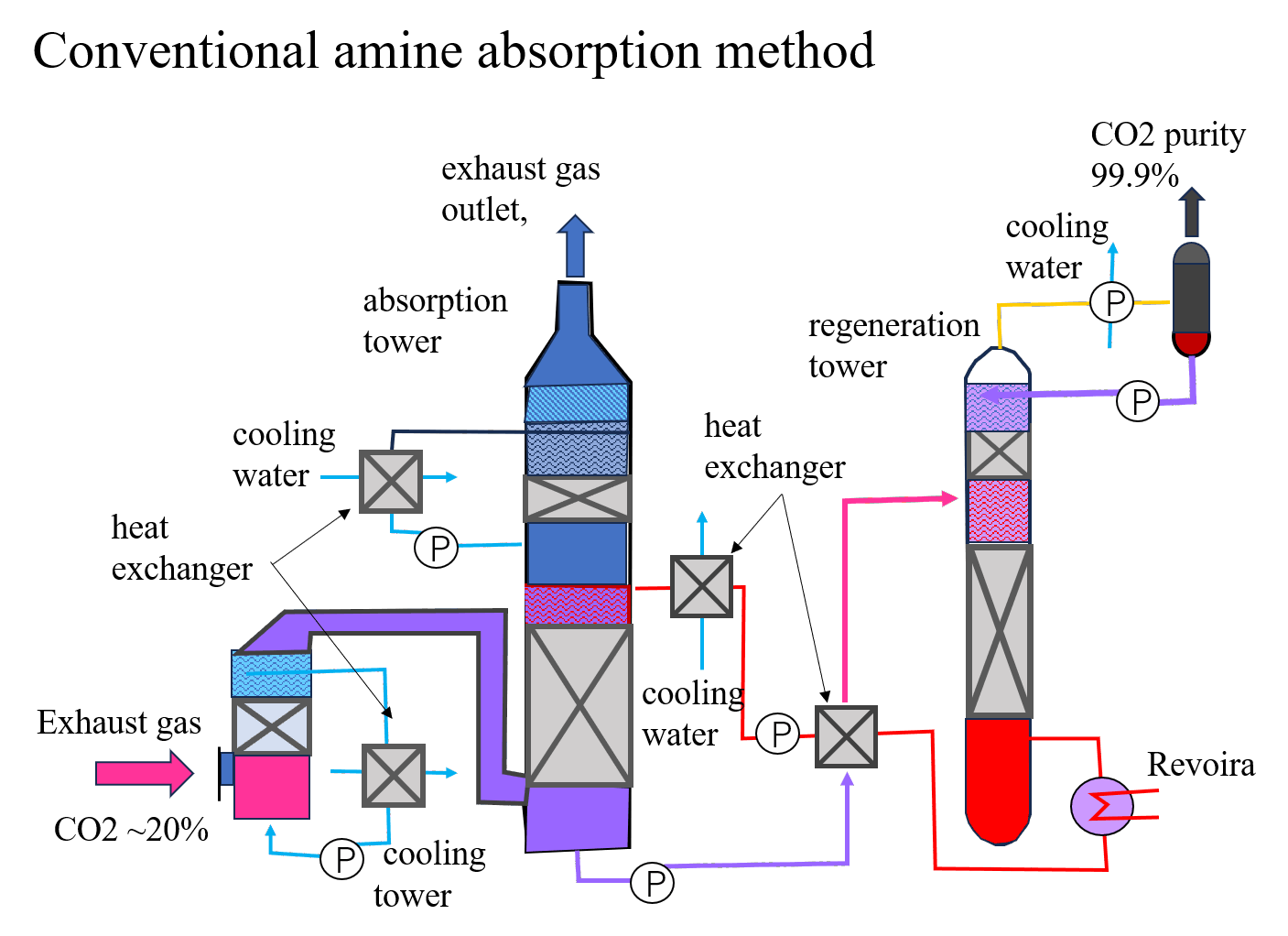
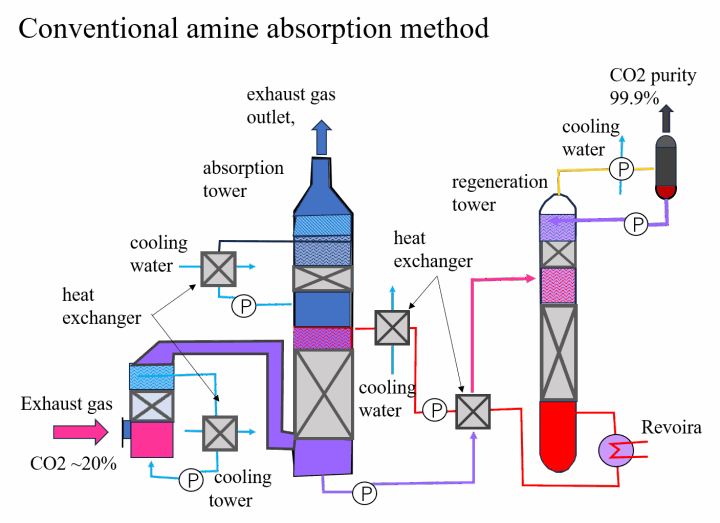
Conventional gray liquefied CO2 gas production uses the waste heat from combustion gases in the apparatus shown in Figure 2 to concentrate and recover CO2. This requires heavy, corrosion-resistant equipment, and large volumes of liquid must be heated and cooled, limiting efficiency even with numerous heat recovery units.
Furthermore, the CO2 gas is sent to the compression and liquefaction apparatus shown in Figure 3 for compression, cooling, and liquefaction. This also requires a large amount of energy and generates significant waste heat.