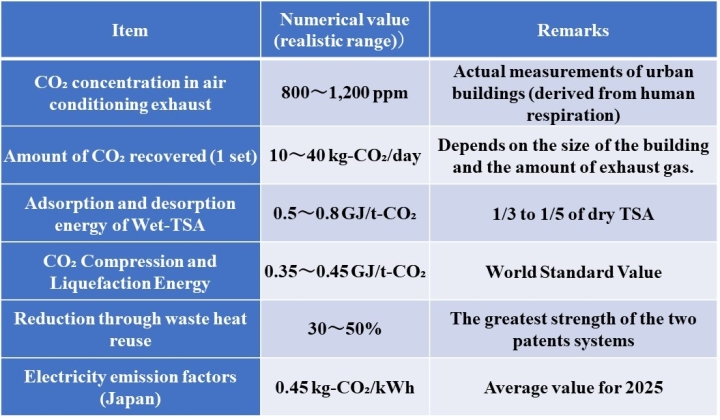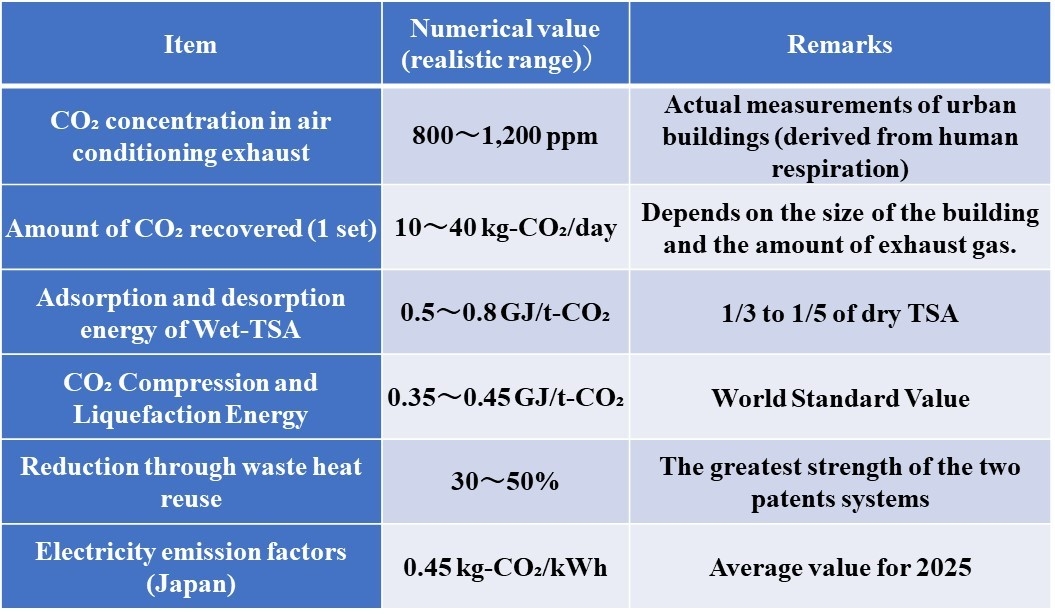
1. Assumptions
LCA of Urban Wet-TSA DAC + Liquefied CO2/Dry Ice Production System
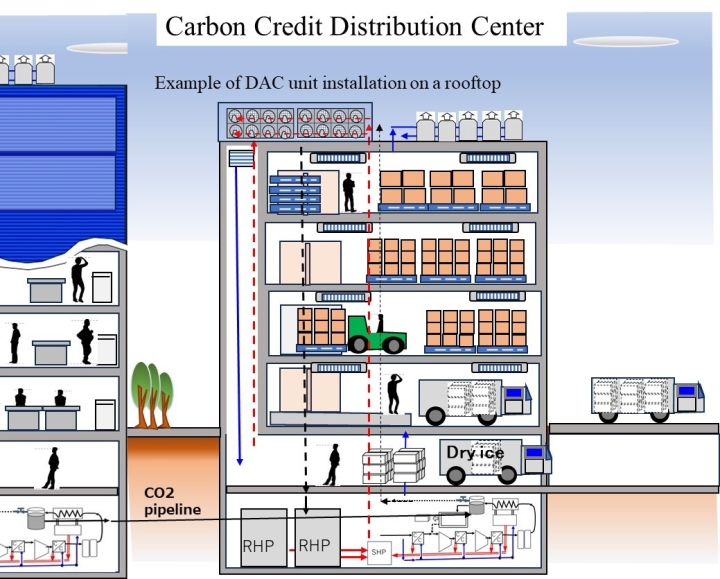
This document presents the LCA (Life Cycle Assessment) of an urban DAC (Air Conditioning Exhaust DAC + Wet TSA + Utilization of Urban Exhaust Temperature and Humidity + Waste Heat Reuse for Liquefied CO₂) in numerical form.
This document presents the LCA (Life Cycle Assessment) of an urban DAC (Air Conditioning Exhaust DAC + Wet TSA + Utilization of Urban Exhaust Temperature and Humidity + Waste Heat Reuse for Liquefied CO₂) in numerical form.
Based on the features of OKANO's two patented technologies, a realistic numerical model for an urban DAC has been constructed by combining international DAC energy intensity, measured values of liquefied CO₂, and CO₂ concentration data from air conditioning exhaust. (Note) Please consider the AI-calculated values as reference values only.
LCA of Urban DAC (Air Conditioning Exhaust DAC): Numerical Model (Latest Version)
1. Assumptions (A realistic model tailored to the specifications of a Wet-TSA system utilizing waste heat from CO2 compression, cooling, liquefaction, and dry ice production equipment)