◆What happened to "An Inconvenient Truth" 20 years later?
In 2006, the film *An Inconvenient Truth*, which warned of the world's descent into global warming, was released and became a global sensation.
Twenty years later, the Earth's average carbon dioxide concentration is steadily rising.
People fear heatstroke, and deaths from heatstroke are increasing even in countries where air conditioning was previously unnecessary. Furthermore, predictions of frequent typhoons and torrential rains around the world have become reality, while at the same time, large-scale forest fires caused by extreme heat have become commonplace annually in countries worldwide. Many companies that publicly declared they were "addressing global warming" by "cultivating forest resources" now feel their advertising efforts have been rendered meaningless. How many people understand the reality that even with various measures such as CCUS and EV development, continuing with current measures will not stop global warming; it will only accelerate, making it irreversible? Do they realize that their children, grandchildren, great-grandchildren, and future generations will experience an even worse "acceleration of global warming" than they did? If they know, then people all over the world, especially the many who will not survive until global warming accelerates further, and the selfish and powerful rulers of today, must realize that they must stop all wars and confront the reality of accelerating global warming.
◆What is liquefied CO2 (gray CO2)?
Liquefied CO2 has a wide range of applications and is used in various fields. For example:
Arc welding: Using carbon dioxide gas to cover the weld area prevents oxidation and nitriding during welding.
Dry ice: Used for food preservation, and the energy released during sublimation is used for cleaning precision and machine parts.
Agriculture: Used in greenhouse cultivation to improve cultivation efficiency, enabling increased production and planned cultivation that is impossible in open-field cultivation.
Beauty and health: Used in artificial carbonated springs, carbonated shampoos, and carbonated lotions.
Medical: Used in laparoscopic surgery to reduce patient burden and promote postoperative recovery.
Industry: Refining low-purity crude CO2 emitted from petrochemical plants and steel mills to produce high-purity CO2 for use as liquefied CO2 and dry ice.
These applications demonstrate the versatility and importance of liquefied CO2. However, liquefied CO2 derived from fossil fuels, except for agricultural uses, is ultimately released into the atmosphere, contributing to global warming. This is gray CO2.
If CO2 is recovered from the air and from respiration, it will not contribute to global warming even if it is eventually released. This is green CO2.
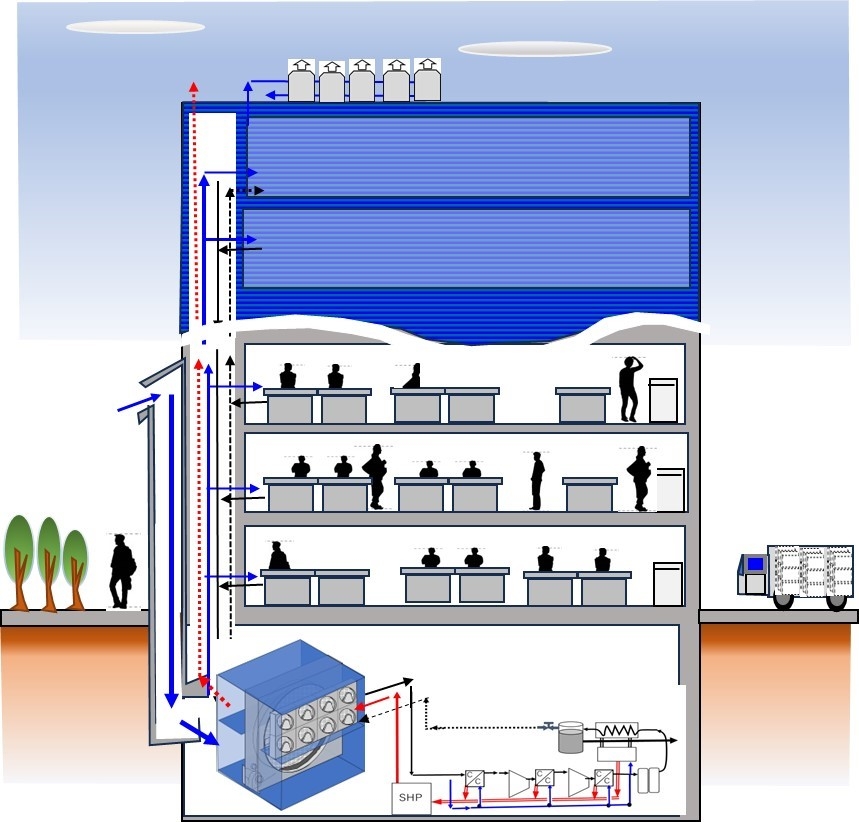
Figure 1 shows that gray liquefied CO2 is recovered from exhaust gases of facilities such as oil refineries, steel mills, and incinerators. The exhaust gases that serve as the raw material for gray liquefied CO2 contain various impurities such as compounds, dust, sulfur compounds, and nitrogen compounds. At recovery facilities, the gas undergoes treatment such as dust removal filters, catalytic filters, and water washing. Then, as shown in the figure, the product is manufactured using a liquefied CO2 production system that combines multiple refrigerators, coolers, compressors, dehumidifiers, liquefaction coolers, and purification tanks (to remove impurities such as oxygen and nitrogen). Such a complex system generates a large amount of compression heat from the compression of CO2 and latent heat when gaseous CO2 liquefies. This heat is removed by refrigerators, cooled by the latent heat of vaporization of water in cooling towers, and then released into the atmosphere.
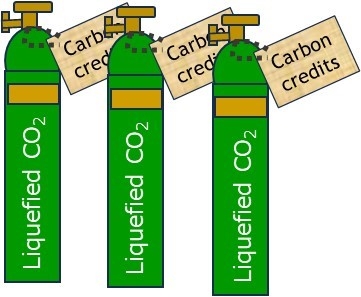
Figure 2: In reality, the transport of liquefied CO2 (gray CO2) further increases gray CO2 emissions. While global demand for liquefied CO2 is increasing, many of the world's major demand cities are scattered far from production (capture) sites. Therefore, transporting large pressurized containers and heavy cylinders to and from demand sites around the world further increases gray CO2 emissions.
Figure 3: CCUS projects for combating global warming: Most current CCUS projects rely on waste heat from power plants or geothermal energy in remote areas. Furthermore, installation sites are limited to unused, flat, barren land (away from urban areas). Is CCS (carbon capture and storage) the only way to capture captured CO2? In mountainous island nations like Japan, suitable installation sites are lacking.
Even if gray CO2 is captured and reused, it is ultimately released back into the atmosphere, increasing the concentration of CO2 in the atmosphere.
In recent years, carbonated drinks, low-malt beers, and regular beers have seen increased consumption, and carbon dioxide is added to enhance their flavor. But are people aware that this carbon dioxide originates from fossil fuels and ultimately contributes to global warming? I hear that some well-known beverage manufacturers are conducting trials to capture carbon dioxide from the atmosphere and use it in carbonated drinks.
Even if gray CO2 is captured and reused, it is ultimately released back into the atmosphere, increasing the concentration of CO2 in the atmosphere.
The contradiction of increasing atmospheric CO2 concentration and a growing demand for liquefied CO2, and the proposal for urban liquefied CO2 production bases.
The global liquefied CO2 market is projected to grow from approximately $9.1 billion in 2024 to $9.48 billion in 2025 and $14 billion in 2035.
However, by 2026, carbon dioxide supply shortages and price increases are expected to become severe. This is due to raw material shortages, transportation problems, and increased global demand, with the impact particularly pronounced in industrial and beverage applications.
To resolve this dilemma, I have obtained the following two global patents and am seeking companies worldwide that can commercialize, expand, and disseminate this technology.
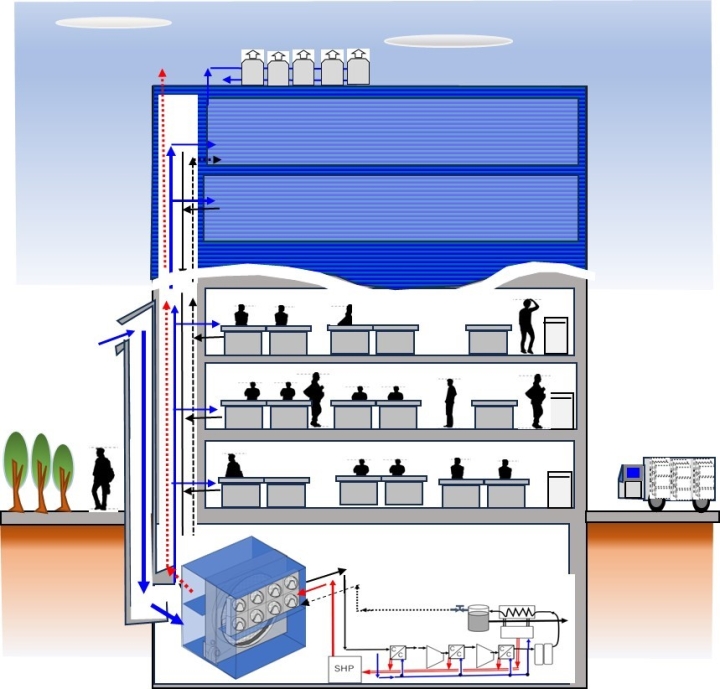
This airborne CO2 capture, concentration, and liquefaction system can be integrated into building air conditioning systems, potentially transforming entire cities into green liquefied CO2 production hubs.
1. Airborne CO2 Capture and Concentration Technology Patent (Wet-TSA)
2. Airborne CO2 Capture and Liquefaction Technology Patent (Wet-TSA) utilizing waste heat from CO2 compression, cooling, and liquefaction equipment
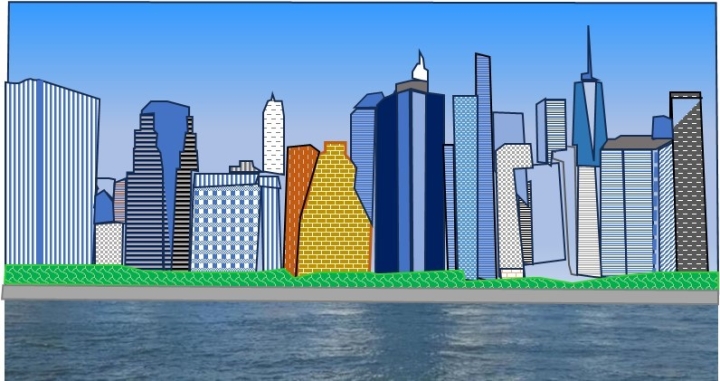
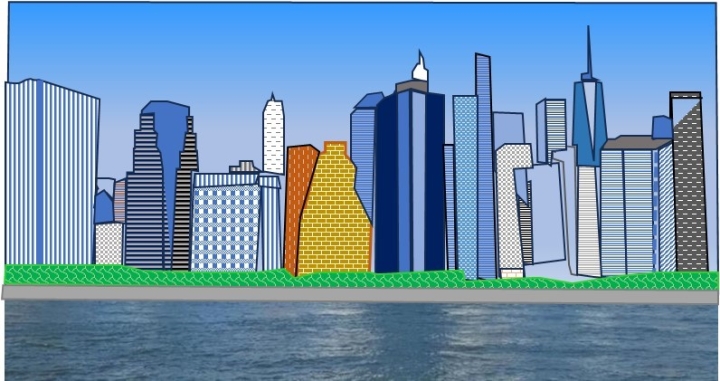
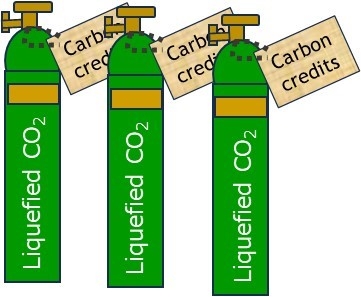
The entire city is a green liquefied CO2 production base.Liquefied CO2 production from building air conditioning exhaustLiquefied CO2 with CO2 credits
日本簿版◆What happened to "An Inconvenient Truth" 20 years later?